
Cherokee County Active Warrants
No official public Cherokee County Sheriff's Office active-warrant search portal was located in the official sources reviewed. That gap matters. A person may have a warrant that does not appear online, and an active arrest warrant may not become a public court record until it has been executed and returned. For that reason, a Cherokee County warrant search works best as a channel stack: sheriff public notices, magistrate questions, Clerk of Superior Court case checks, eCourts Portal criminal case searches, and custody lookup if an arrest has already happened.
The Cherokee County Sheriff's Most Wanted page is the local sheriff source that most directly names wanted people. It is not a complete list of every Cherokee County warrant. The page instructs people to call the Sheriff's Office or 911, which is a clue that it is a public safety notice rather than a full warrant index. Returned arrest and search warrants become court records unless sealed, but law-enforcement investigative and criminal intelligence records may be withheld under North Carolina public-records law.
The sheriff source image from the official Most Wanted page shows the local public notice route for Cherokee County warrant records.
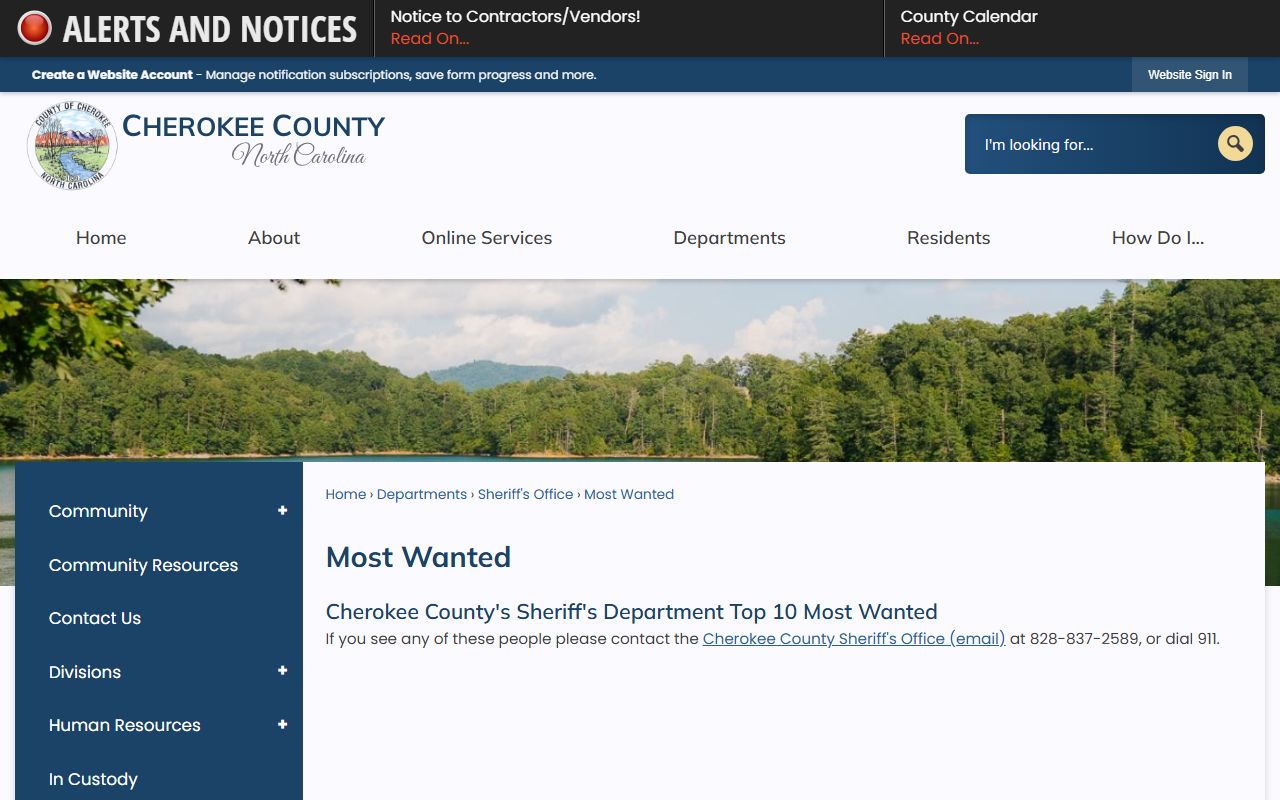
Use that page as a lead source, then verify possible Cherokee County warrant matches through the sheriff, magistrate, clerk, or court channel that applies.
Cherokee County Warrant Types
Warrant language in Cherokee County should follow North Carolina court terms, not labels borrowed from other states. Magistrates are part of District Court and can issue arrest warrants, set initial bail, and handle certain first-appearance matters. Superior Court and District Court records may later show returned warrants, orders for arrest, criminal summonses, hearing events, bond conditions, and related case entries. A warrant record is not the same as a conviction, and a public notice is not proof that a case has ended.
- Arrest warrant authorizes arrest after a judicial officer finds probable cause for a criminal charge.
- Bench warrant or order for arrest may follow missed court, contempt, probation issues, or other court orders.
- Search warrant authorizes a search of a person, place, vehicle, or property and may be sealed for a time.
- Fugitive warrant can relate to custody requests from another county or another state.
- Criminal summons orders a person to appear in court without arrest at the time it is served.
Note: North Carolina records may use "order for arrest" where another state might use a different warrant label.
Search Cherokee County Warrants
Because Cherokee County does not publish a complete warrant search portal, the best official search starts with known facts: full legal name, approximate age, date of birth if known, case number if available, and the source of the possible warrant. The North Carolina eCourts Portal can show related public criminal cases, hearings, payments, and case status, but it should not be treated as a live warrant list. The Cherokee County court contact directory lists the Clerk of Superior Court, magistrates, and District Attorney contacts for court-process questions.
- Check the Sheriff's Most Wanted page for a public Cherokee County warrant notice or request for help.
- Search eCourts Portal by name or case number for related Cherokee County criminal cases and court dates.
- Call the Clerk of Superior Court for returned warrants, case-file lookup, and court-date questions.
- Call magistrates for process questions when the issue may involve a new warrant, bond, or first appearance.
- Use the In Custody portal if the person may already have been arrested and booked into Cherokee County custody.
The county-linked Cherokee County inmate grid is useful after an arrest because it shows current custody records rather than unresolved warrant status.
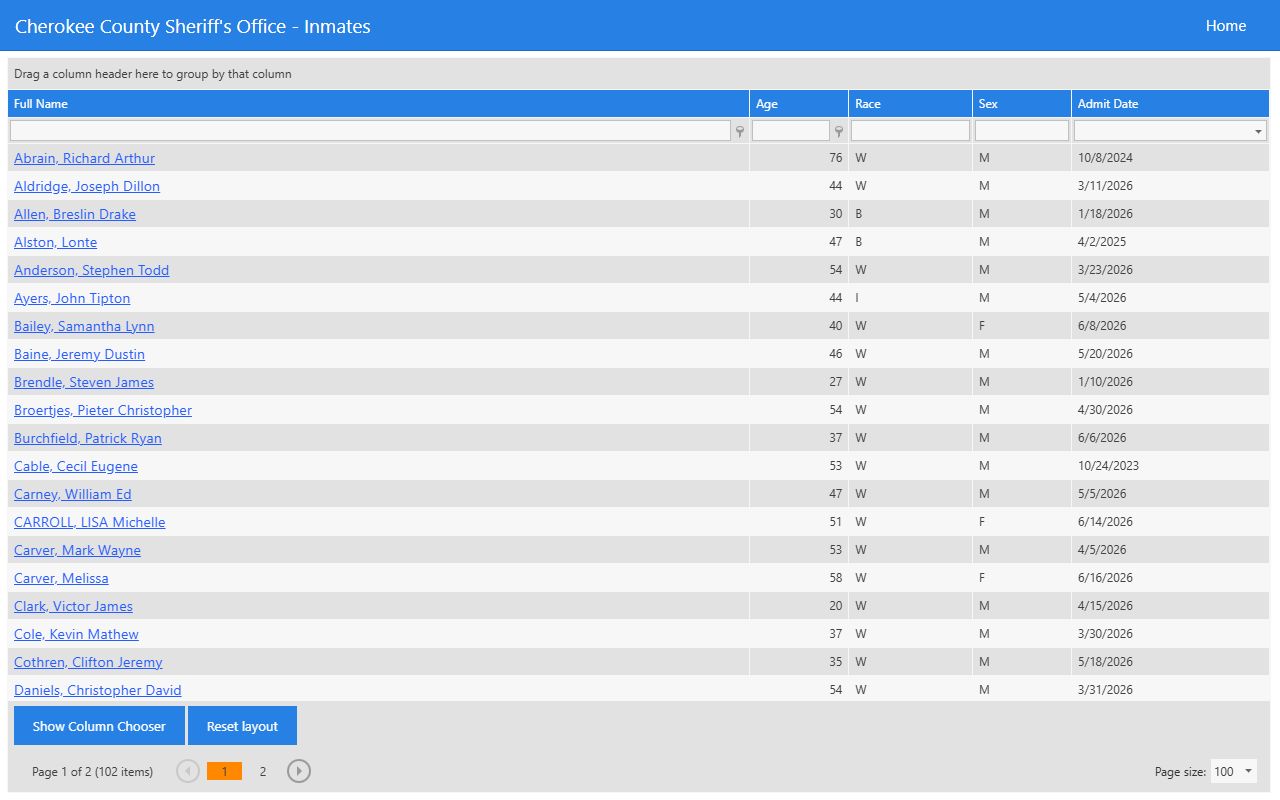
If the person appears in custody, the warrant question usually shifts to bond, court date, charges filed, and the active criminal case record.
Cherokee County Warrant Search Fields
The warrant search-field inventory is indirect because there is no official Cherokee County active-warrant database with a dedicated warrant form. The practical fields come from the official sources that may show related records: Most Wanted notices, eCourts Portal case search, the In Custody jail roster, and direct office contact. Use the narrowest known identifier first. A case number or citation number is less likely to return false matches than a common name.
| Field or Channel | Type | Required | Options / Format Notes |
|---|---|---|---|
| Most Wanted name | public notice | no | Use the sheriff page only for people publicly listed by the agency. |
| Record number or name | text | conditional | eCourts Smart Search accepts case number or party name in Last, First format. |
| Filter by Location | dropdown | recommended | Select Cherokee County to reduce statewide name matches. |
| Search Hearings | court-date search | optional | Use for related hearing dates, missed appearances, and pending events. |
| In Custody By name | text | optional | Search current jail custody by inmate name after a reported arrest. |
| In Custody By charge | text | optional | Search charge descriptions in the county-linked roster system. |
| Office phone verification | contact method | case dependent | Use sheriff, magistrate, clerk, or DA contacts based on the record issue. |
Cherokee County Warrant Records Show
A Cherokee County warrant record may be sparse online. A public case result may show a criminal case with charge and hearing data, while the actual returned warrant or search warrant may require clerk access. A sheriff Most Wanted entry may name a person and invite tips without showing the full court file. Custody records may show current jail status after arrest, but they do not replace the criminal court case file or a certified record from the Clerk of Superior Court.
| Field | What It Shows |
|---|---|
| Name | The person named in a sheriff notice, court case, or custody record. |
| Case or record number | The court identifier used for related criminal case lookup when available. |
| Charge description | The alleged offense tied to the warrant, summons, or criminal case. |
| Issuing process | Whether the matter appears as an arrest warrant, order for arrest, search warrant, or summons when shown. |
| Court date | The next hearing or missed court event visible through court-date or case tools. |
| Custody status | Whether a person is currently booked into the Cherokee County Detention Center. |
| Bond or release information | Bond may be set by a magistrate or court, but availability depends on the public record source. |
Resolve Cherokee County Warrants
An outstanding Cherokee County warrant should be handled through official offices, not through paid data brokers or rumor. Start by checking court dates and case information, then contact the Clerk of Superior Court, magistrates, the Sheriff's Office, or an attorney. The Clerk of Superior Court can answer case-file and court-date questions. Magistrates can answer local process questions. The Sheriff's Office can address law-enforcement contact, custody, and public safety instructions.
If surrender is required, ask where to report, what identification to bring, whether bond may be posted, whether a magistrate appearance will occur, and how court dates will be confirmed. After a warrant issue is resolved, check related court records, custody status, and DMV or license consequences if the case involved traffic or failure to appear. Record updates can lag behind the hearing, payment, or release event.
Important: People who may have an active warrant should speak with counsel before surrender or contact with law enforcement.
Cherokee County Warrant Follow-Up
Statewide tools can help when a Cherokee County warrant has already led to custody or when the person may be held outside the county. North Carolina VINE provides custody and case notifications, while the North Carolina Department of Adult Correction offender search applies to sentenced state inmates, probationers, and parolees. Federal custody is separate from Cherokee County court records and may require the Federal Bureau of Prisons inmate locator.
The North Carolina VINE notification source supports custody follow-up after a warrant-related arrest.
VINE is a notification tool, so it should be paired with Cherokee County court and sheriff sources for the case record itself.
The Federal Bureau of Prisons inmate locator is separate from Cherokee County warrant records but useful when federal custody is possible.
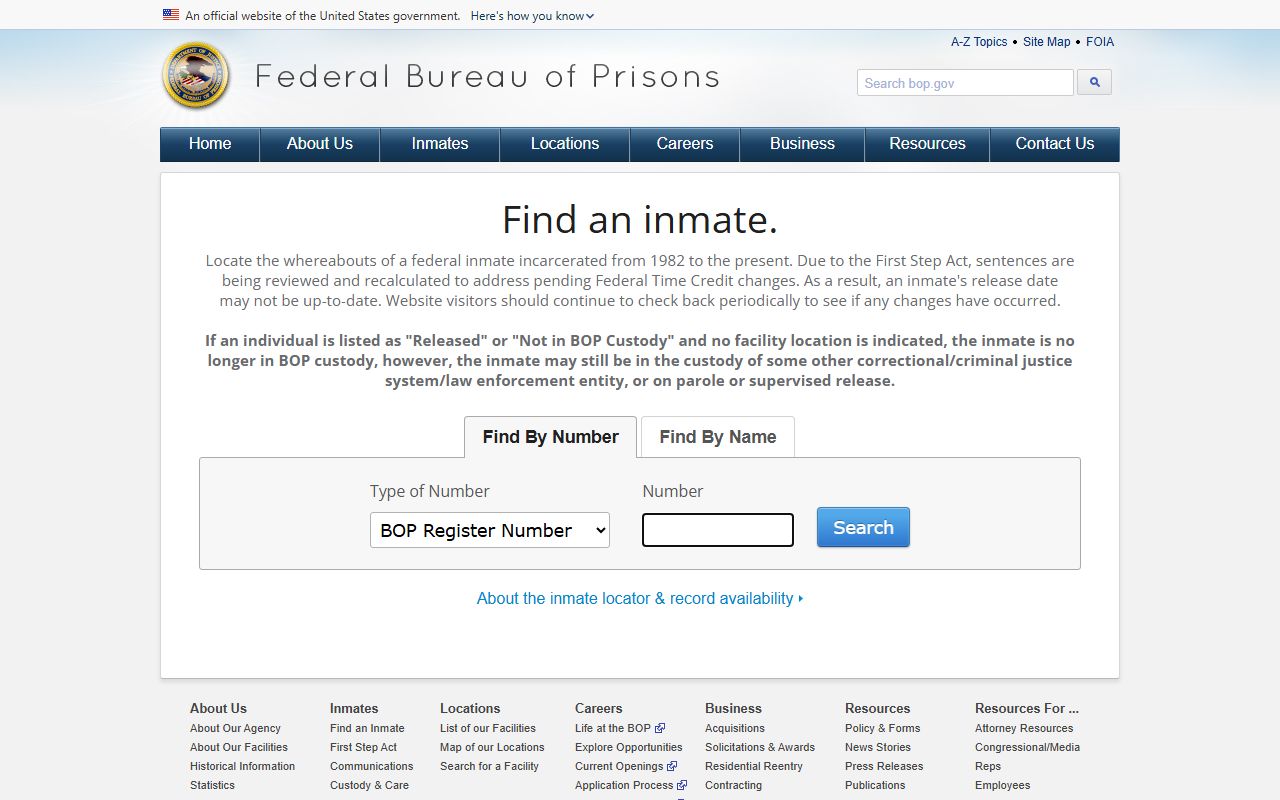
Federal locator results do not confirm a Cherokee County warrant, but they can explain why a person is not found in the local jail roster.
Restricted Cherokee County Warrants
Some Cherokee County warrant material is not public. A search warrant may be sealed by court order. Juvenile matters are restricted under North Carolina law. Investigative files and criminal intelligence records are generally not public records, even when basic arrest, charge, incident, or returned warrant details may be public. Expunged or sealed case records may also disappear from ordinary public searches.
The public-access framework comes from North Carolina Chapter 132, which includes public-records rules and law-enforcement record limits, and from clerk record duties under N.C.G.S. 7A-109. For Cherokee County, that means the public may be able to inspect returned court records through the clerk, while an active unserved warrant, sealed search warrant, or juvenile matter may not be available in the same way.