
Cherokee County Criminal Court Records
A criminal court record is the court case file that the Clerk of Superior Court keeps once a criminal matter is filed. It tracks the court side of the case: charge entries, appearances, orders, motions, pleas, trial events, verdicts, dismissals, probation terms, fines, costs, and sentencing. Arrest details and current custody status may be held by the Sheriff's Office or jail roster, while the court record is the official case history.
Cherokee County uses North Carolina's unified court structure. Superior Court handles felony criminal cases and appeals from District Court misdemeanors and infractions. District Court handles misdemeanors, infractions, most traffic matters, and first-stage proceedings for many criminal cases. Magistrates issue warrants, set initial bail, and handle certain waivers or small matters, but the lasting criminal case file is tracked through the court and clerk system.
The Judicial Branch criminal background check topic explains certified single-county criminal searches.
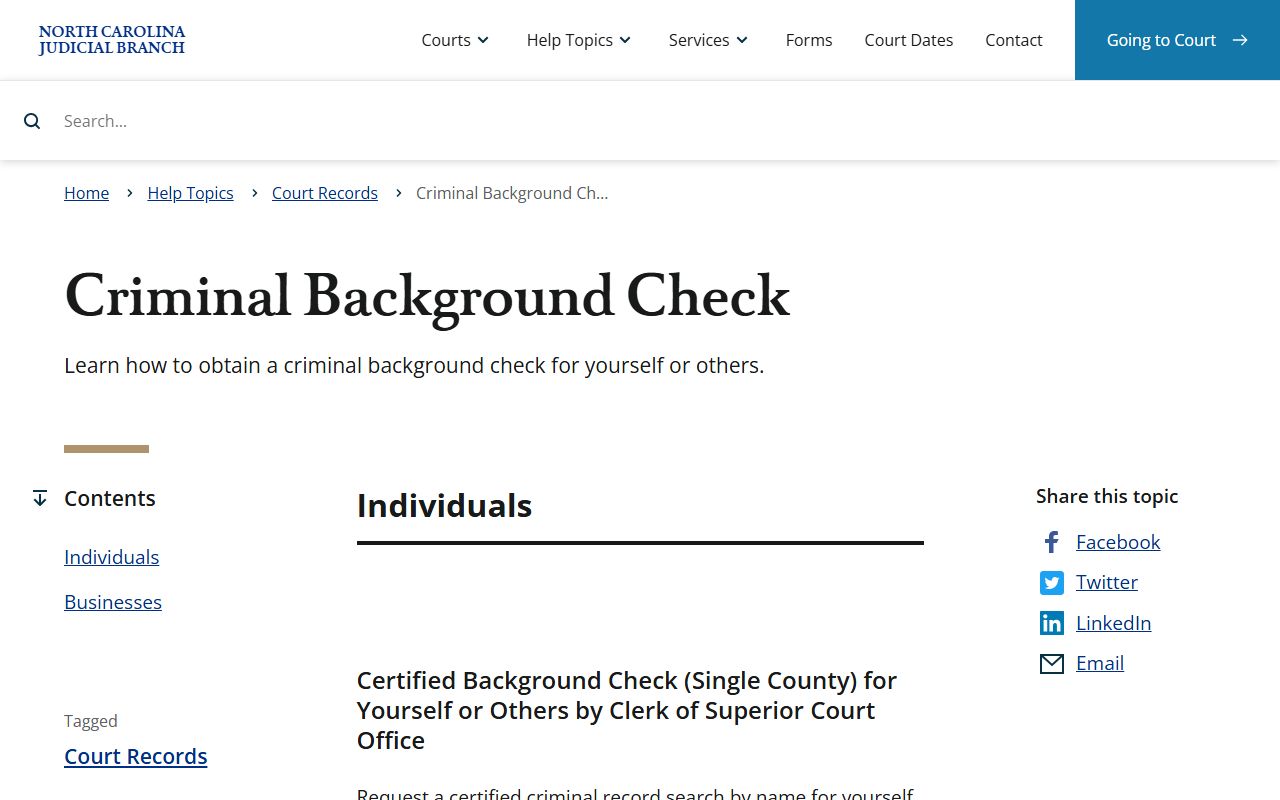
Search Cherokee County Criminal Cases
The online starting point is the North Carolina eCourts Portal. Smart Search can locate public criminal case information by case number or defendant name, and Search Hearings can help find upcoming criminal court dates. For background checks, the Judicial Branch directs users to the Clerk of Superior Court and Form AOC-CR-314 rather than relying on portal search results.
- Open the eCourts Portal and choose Smart Search for case lookup.
- Search by criminal case number or defendant name in Last, First Middle Suffix format.
- Use Advanced Filtering Options to narrow the location to Cherokee County.
- Open the criminal case result and review public docket entries, hearings, charges, and disposition fields.
- Request certified copies or a certified single-county criminal record search from the Clerk of Superior Court when official proof is needed.
Public self-service terminals at clerk offices can search criminal records by defendant name, case number, or victim/witness name. For Cherokee County cases, the clerk's office at the courthouse is the local fallback when online records are incomplete, sealed from public view, or too old for complete portal access.
Cherokee County Criminal Case Stages
A criminal court record changes as the case moves. Early entries may show a warrant, summons, charge, bond, or first setting. Later entries can show arraignment, motions, continuances, plea negotiations, trial settings, verdicts, dismissals, judgments, costs, probation, or jail terms. The record is cumulative, so one charge may be amended, reduced, dismissed, or resolved differently from another charge in the same case.
Case flow: Charges Filed › Arraignment › Pretrial / Motions › Plea or Trial › Disposition › Sentencing
| Stage | What Happens |
|---|---|
| Charges Filed | The prosecutor or charging process places the allegation into a court case. |
| Arraignment | The defendant is formally advised of the charge and enters or prepares for a plea. |
| Pretrial / Motions | The court handles scheduling, evidence issues, bond, continuances, and legal requests. |
| Plea or Trial | The case resolves by negotiated plea, bench trial, jury trial, dismissal, or other ruling. |
| Disposition / Sentencing | The court records the outcome, sentence, costs, probation, restitution, or other judgment terms. |
What Cherokee County Criminal Records Show
Criminal court records are read field by field. A single case can contain several counts, each with its own charge text, status, and result. The disposition should be checked for each count, because one charge may be dismissed while another results in a conviction or plea. A final sentence may include jail, probation, fines, court costs, restitution, treatment conditions, or other court orders.
| Field | What It Shows |
|---|---|
| Case Number | The court identifier for lookup, clerk requests, payments, and hearing searches. |
| Defendant | The person charged, usually listed by name and sometimes other public identifiers. |
| Charges | Offense descriptions, statute references, severity, counts, and charge status when public. |
| Hearings | Scheduled or completed appearances, courtroom details, and judicial officer information. |
| Plea or Verdict | Whether the charge was resolved by plea, trial verdict, dismissal, or other action. |
| Disposition | The case or count outcome, such as guilty, not guilty, dismissed, responsible, or judgment entered. |
| Sentence | Jail, probation, costs, fines, restitution, treatment, or other court-ordered terms. |
For the narrower charge history after an arrest, use the separate Cherokee County arrest records and court charges page. The criminal court record is broader because it follows the full court case through outcome and sentence.
Charges vs Convictions
Being charged is not the same as being convicted. A charge is an accusation filed into court. A conviction is a judgment after a guilty plea, verdict, or other court finding. Cherokee County criminal court records can show charges that were dropped, dismissed, amended, reduced, or resolved with no conviction, so the disposition is the key field.
| Charge | Conviction | |
|---|---|---|
| Meaning | An allegation filed in court. | A final guilty finding or plea accepted by the court. |
| Proof Stage | Based on probable cause or charging authority. | Based on plea, verdict, or judgment. |
| Record Reading | Check for amendments, reductions, and dismissals. | Check sentence, costs, probation, and collateral orders. |
Cherokee County Criminal Court Actors
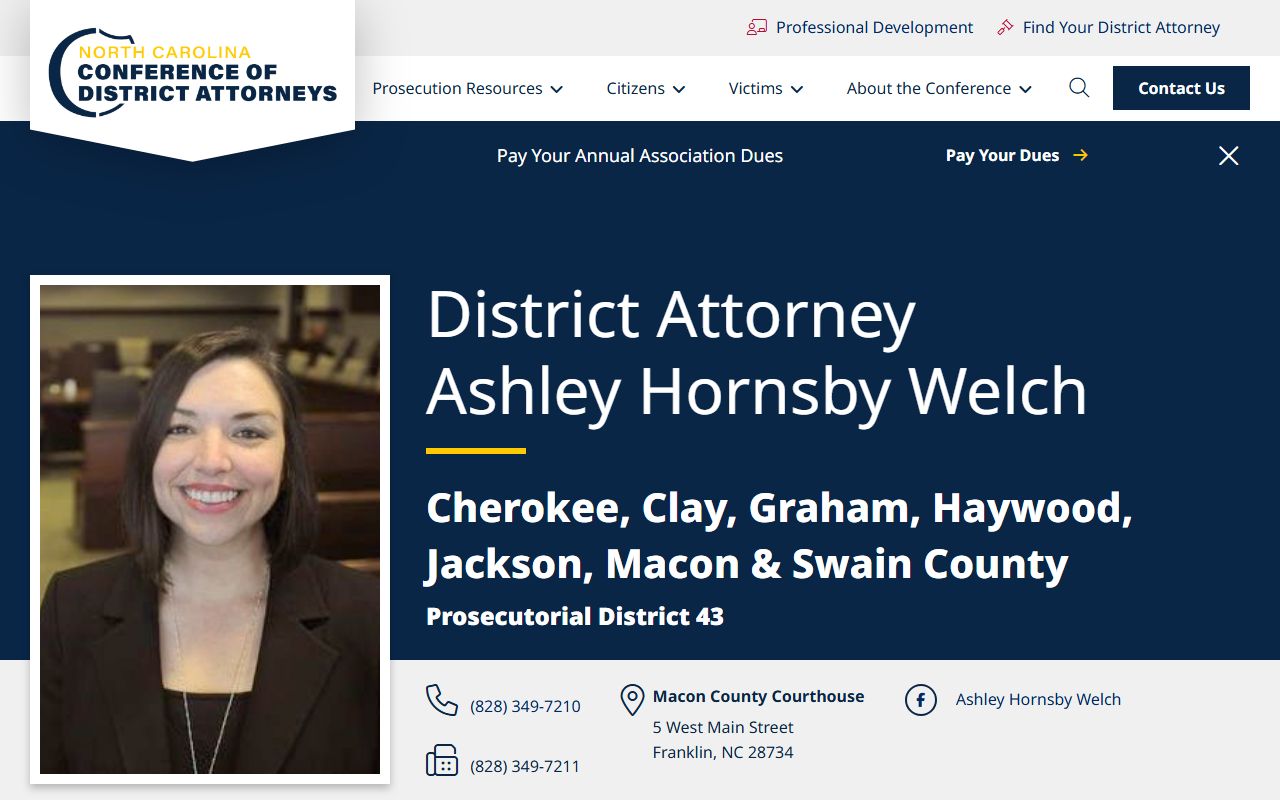
Cherokee County is in Prosecutorial District 43. The District Attorney for the district is Ashley Hornsby Welch, and the district includes Cherokee, Clay, Graham, Haywood, Jackson, Macon, and Swain Counties. The local Cherokee County court contact directory lists the District Attorney contact as (828) 835-7750. The DA's role includes prosecuting criminal cases, preparing criminal trial dockets, advising law enforcement, and working with victims.
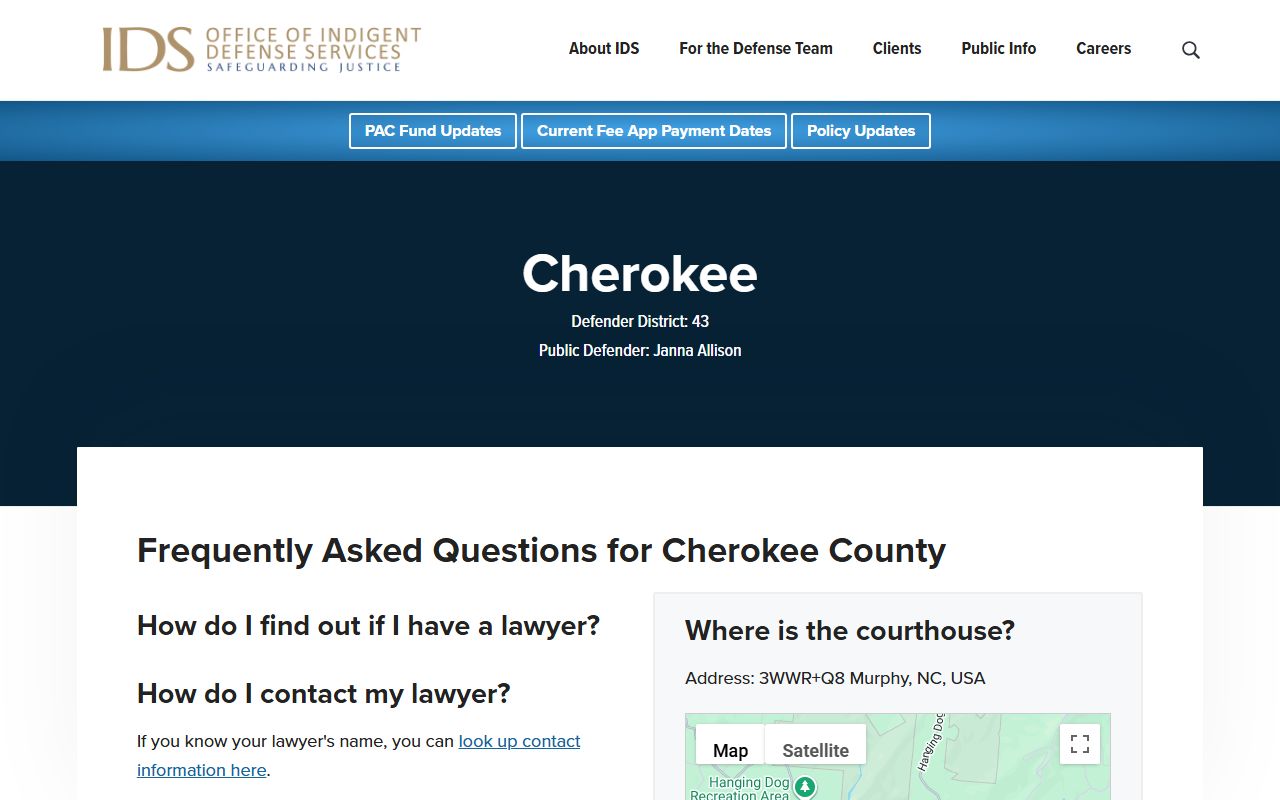
Indigent defense is handled through Defender District 43. The NC Office of Indigent Defense Services identifies Janna Allison as Public Defender for District 43, with district resources covering Cherokee County. These offices affect criminal court records because prosecutor decisions, defense appearances, appointment orders, continuances, pleas, and trial settings can all appear as docket activity.
The Prosecutorial District 43 page identifies the district attorney structure for Cherokee County criminal cases.
The NCIDS Cherokee County page provides indigent defense context for local criminal cases.
The statewide defender directory helps confirm public defender resources for District 43.
Access to Cherokee County Criminal Records
Criminal court files are public unless a statute, court order, or confidentiality rule restricts access. N.C.G.S. Chapter 132 addresses public records generally and law-enforcement record limits, while N.C.G.S. 7A-109 governs clerk record keeping. Law-enforcement investigative records are not the same as filed criminal case records, so a sheriff report may be withheld while a filed court case is public.
For certified single-county criminal record searches, the Judicial Branch lists a $25 fee and directs users to submit Form AOC-CR-314 to the clerk. Mail payment must be by money order or certified check, not personal check. The portal may help find a case, but the Judicial Branch does not recommend portal searches as the official background-check route.
Important: Use certified clerk searches for official criminal record proof, especially when a portal result is incomplete or ambiguous.
Sealed and Expunged Criminal Records
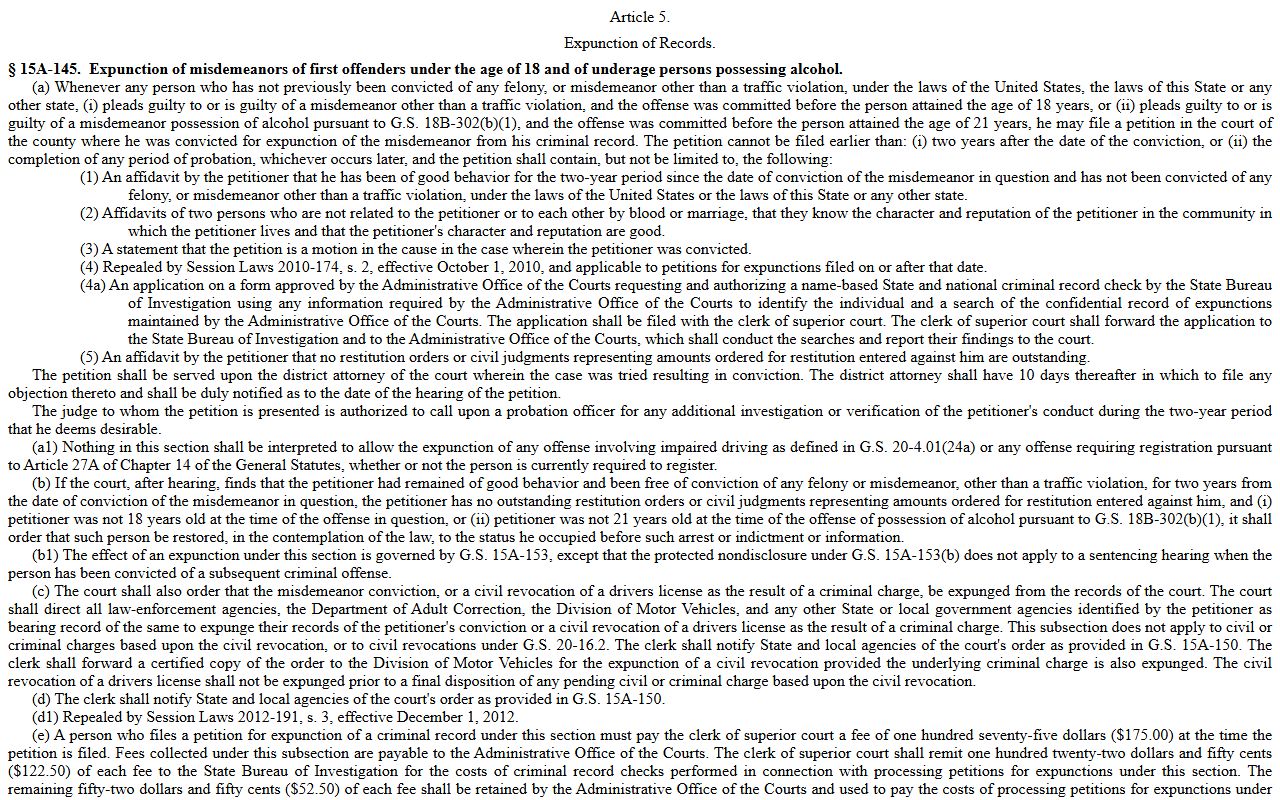
North Carolina uses the terms expunction and expungement for the legal process that removes or seals qualifying criminal records. Eligibility depends on the statute, the person's age at the offense, whether charges were dismissed, whether the person was found not guilty, whether the offense was a first offense, the seriousness of the offense, waiting periods, and prior record history. Juvenile expunction follows separate juvenile rules.
| Sealed | Expunged | |
|---|---|---|
| Public Visibility | Hidden from ordinary public access by law or order. | Removed from ordinary public view after a granted expunction. |
| Record Source | The case may still exist for limited authorized access. | State records may be sealed or destroyed as required by law. |
| Eligibility | Depends on court order or confidentiality statute. | Depends on Chapter 15A Article 5 and related statutes. |
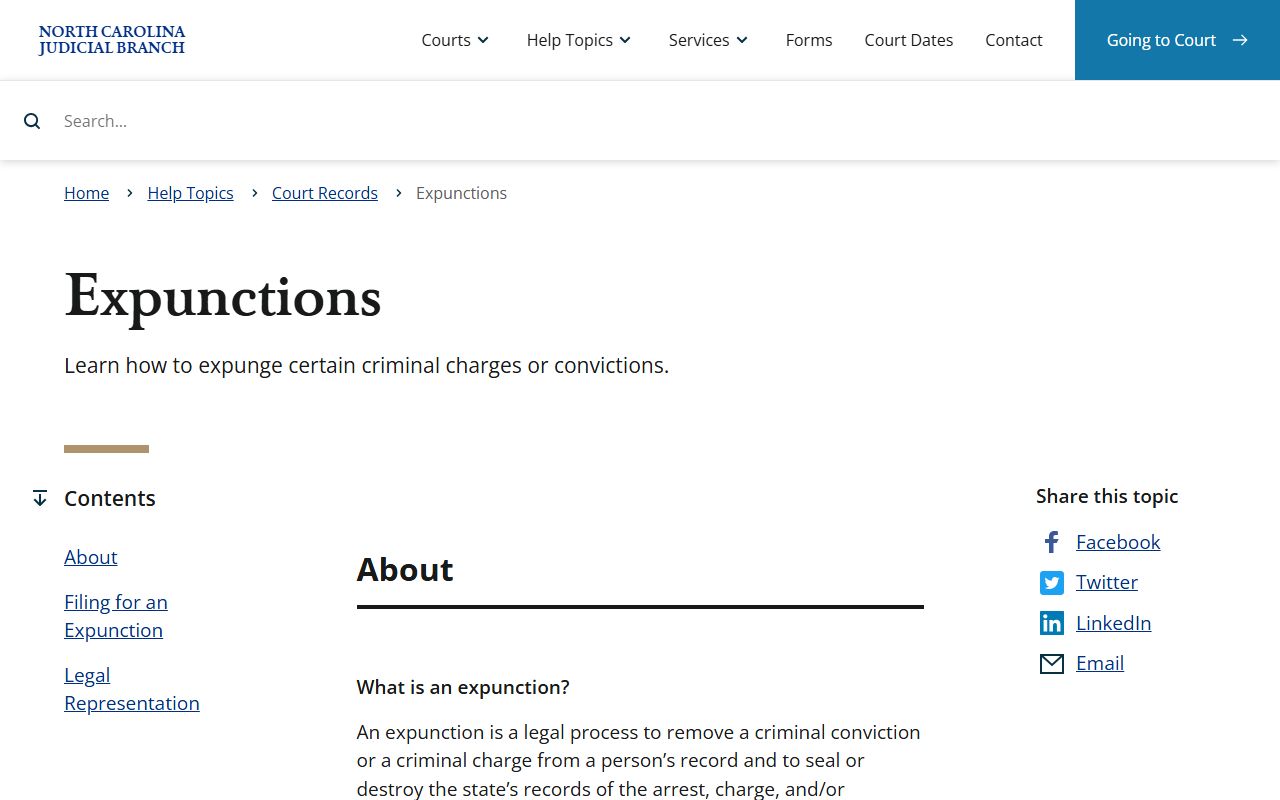
The Judicial Branch expunctions help topic explains the process in plain language.
The adult expunction statutes are collected in Chapter 15A, Article 5.
Restricted Cherokee County Criminal Records
Juvenile records are not ordinary public criminal court records. N.C.G.S. 7B-3000 makes juvenile records confidential except as allowed by statute or court order. Mental health proceedings, sealed matters, expunged cases, protected victim information, Social Security numbers, financial account data, and minor-identifying details may also be restricted.
When a criminal case is missing from a Cherokee County criminal court records search, check for name format issues, county filtering, older paper files, expunction, sealing, juvenile status, or a case that has not yet reached the court docket. For current custody, use the Sheriff's Office custody tools. For active warrant questions, use the sheriff, magistrates, clerk, and court records rather than assuming a warrant appears online.