
Cherokee County Arrest Records and Charges
Arrest records come from the law-enforcement and detention side of an event. In Cherokee County, the Sheriff's Office and Detention Center handle custody information, including current inmate searches through the county-linked In Custody portal. A custody result may show name, age, race, sex, admit date, and charge-related fields, but the visible jail grid is not the same as the criminal court case file.
Court charges after arrest begin when the allegation is filed into court through a charging document, warrant, summons, information, indictment, or related criminal process. Prosecutors decide how to proceed, and the Clerk of Superior Court keeps the case record after filing. For the full case outcome, including pleas, verdicts, dispositions, and sentencing, use Cherokee County criminal court records.
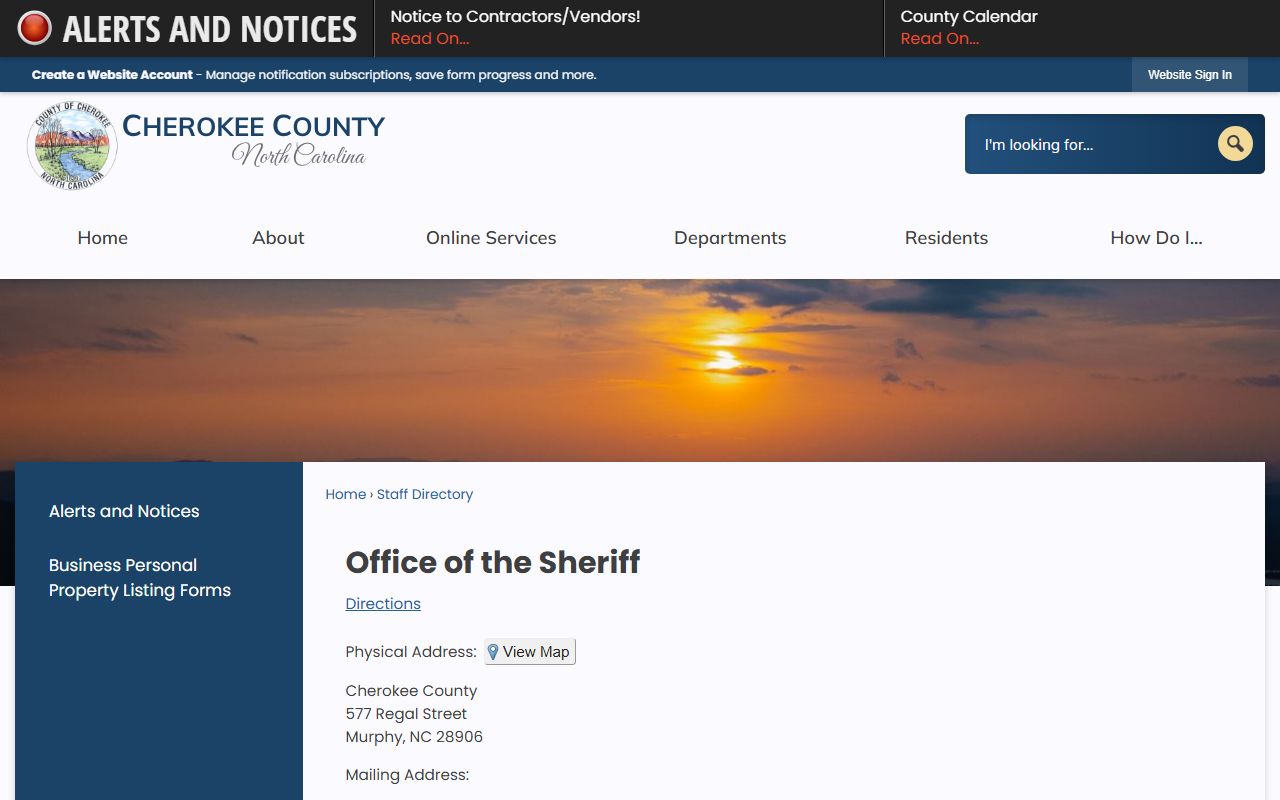
The Sheriff's Office staff directory lists local law-enforcement and detention contacts.
Find Cherokee County Arrest Records
The search path depends on timing. If the person was recently booked, start with the Cherokee County In Custody portal or Detention Center. If charges have been filed in court, use the North Carolina eCourts Portal and filter to Cherokee County. If the case needs official proof, certified copies, or a certified single-county criminal record search, contact the Clerk of Superior Court.
- Check current custody records if the person may still be held in the Cherokee County Detention Center.
- Search eCourts Smart Search by defendant name or case number for filed court charges.
- Filter to Cherokee County and review each charge, status, hearing, and disposition field.
- Use the Clerk of Superior Court for certified criminal searches, official copies, returned warrants, or paper files.
- Use state or federal custody tools only when the person may be in state prison, probation/parole, VINE notification status, or federal custody.
The Sheriff's Office main phone is (828) 837-2589, and the Detention Center phone is 828-837-2521. The clerk's court-record phone is (828) 835-7740. These channels answer different questions, so a recent arrest may require both custody lookup and court charge lookup.
Court Charges After Arrest
Charges after arrest are formal allegations, not final outcomes. They may start with a complaint, criminal summons, warrant, information, indictment, or other North Carolina criminal process. In felony matters, Superior Court becomes important as the higher trial court. In misdemeanors and infractions, District Court handles much of the case activity. Magistrates can issue warrants and set initial bail, which may later appear in related court records.
| Charging Document | Who Uses It | What It Means |
|---|---|---|
| Complaint or Warrant | Law enforcement, magistrate, or prosecutor process | Starts or supports a criminal accusation and may lead to arrest or court appearance. |
| Information | Prosecutor | Formal prosecutor-filed charge in the court record where allowed. |
| Indictment | Grand jury | Formal felony charging document returned by a grand jury. |
North Carolina terms should be read from the actual case entry. Do not assume a Texas-style charge label or a generic national term when the Cherokee County court record uses a specific North Carolina form or status.
Cherokee County Charge Status
Charge status can change as the case moves. A single arrest can lead to several separate charges, and each charge can have its own disposition. One count might be dismissed while another is reduced or resolved by plea. That is why arrest records should not be read as conviction records.
| Status | What It Means |
|---|---|
| Pending | The charge is active and has not reached final disposition. |
| Amended / Reduced | The charge text, severity, or count has changed during prosecution or plea negotiation. |
| Dismissed | The court record shows the charge was ended without a conviction on that count. |
| Not Guilty | The charge did not result in a guilty finding after trial or court decision. |
| Guilty / Responsible | The case or count resulted in a conviction or responsibility finding, depending on case type. |
Charges vs Convictions
The most important distinction in Cherokee County arrest records and court charges is accusation versus outcome. An arrest is an event. A charge is a formal allegation. A conviction is a court judgment after a guilty plea, verdict, or finding. Employers, licensing bodies, courts, and agencies may treat these stages differently, so the disposition field should be checked before drawing conclusions.
| Charge | Conviction | |
|---|---|---|
| Stage | Filed allegation after arrest or summons. | Final guilty finding or plea accepted by the court. |
| Record Location | May appear in court case data and sometimes custody data. | Appears in the final disposition and sentence fields. |
| How to Read It | Check whether it was amended, reduced, dropped, or dismissed. | Check judgment, sentence, costs, probation, and expunction eligibility. |
Sheriff Records and Custody Data
The Cherokee County Sheriff's Office is located at 577 Regal Street in Murphy. The research identifies Sheriff Chris Wood and lists the main sheriff phone as (828) 837-2589. The Detention Center page says the facility opened in summer 2008 and expanded the former 43-inmate jail to nearly 150 beds, with medical, juvenile, female, and male pods. The In Custody portal is the official county-linked search tool for current jail custody.
Visible custody grid fields include full name, age, race, sex, and admit date. Additional observed fields include first name, last name, middle name, primary charge, and primary charge court type. These fields help locate a recent booking, but they do not provide the full court case file, final disposition, sealed status, or certified criminal history.
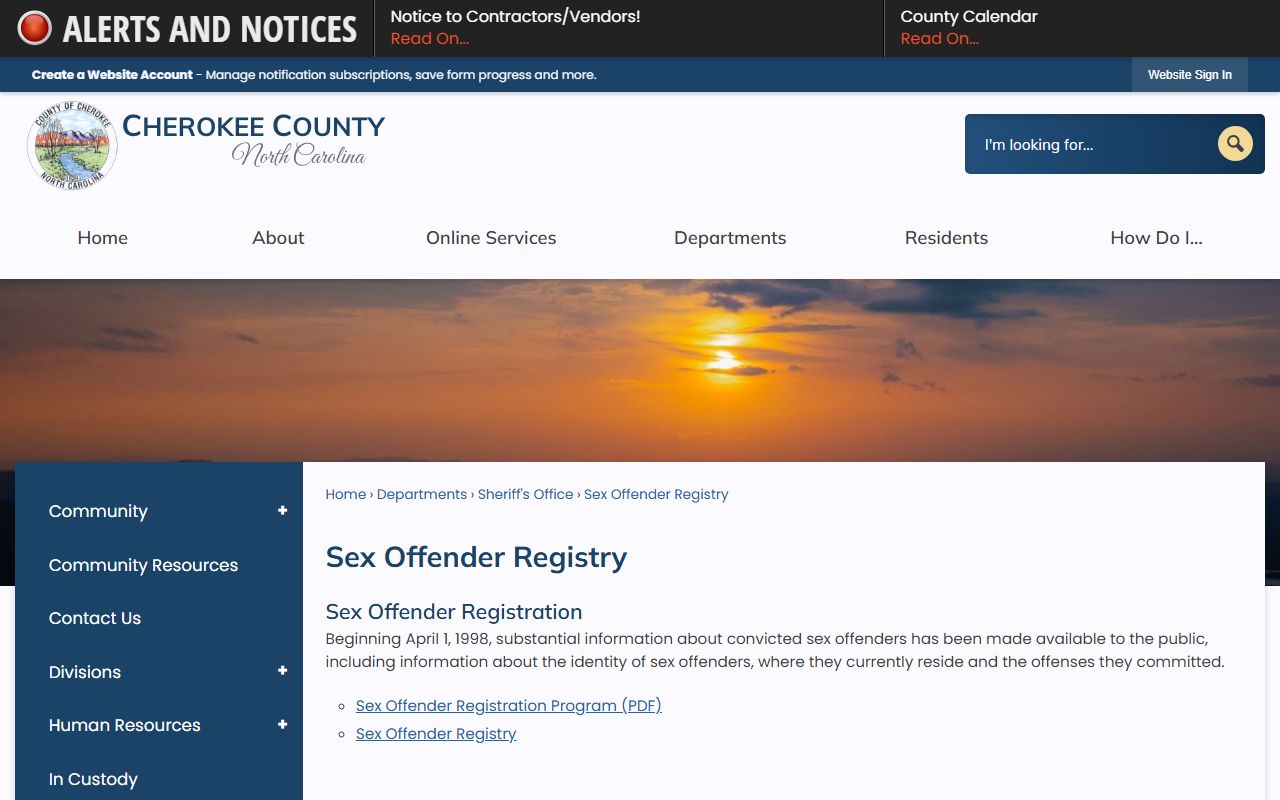
The Sheriff's sex offender registry page is a separate public-safety resource, not a court charge index.
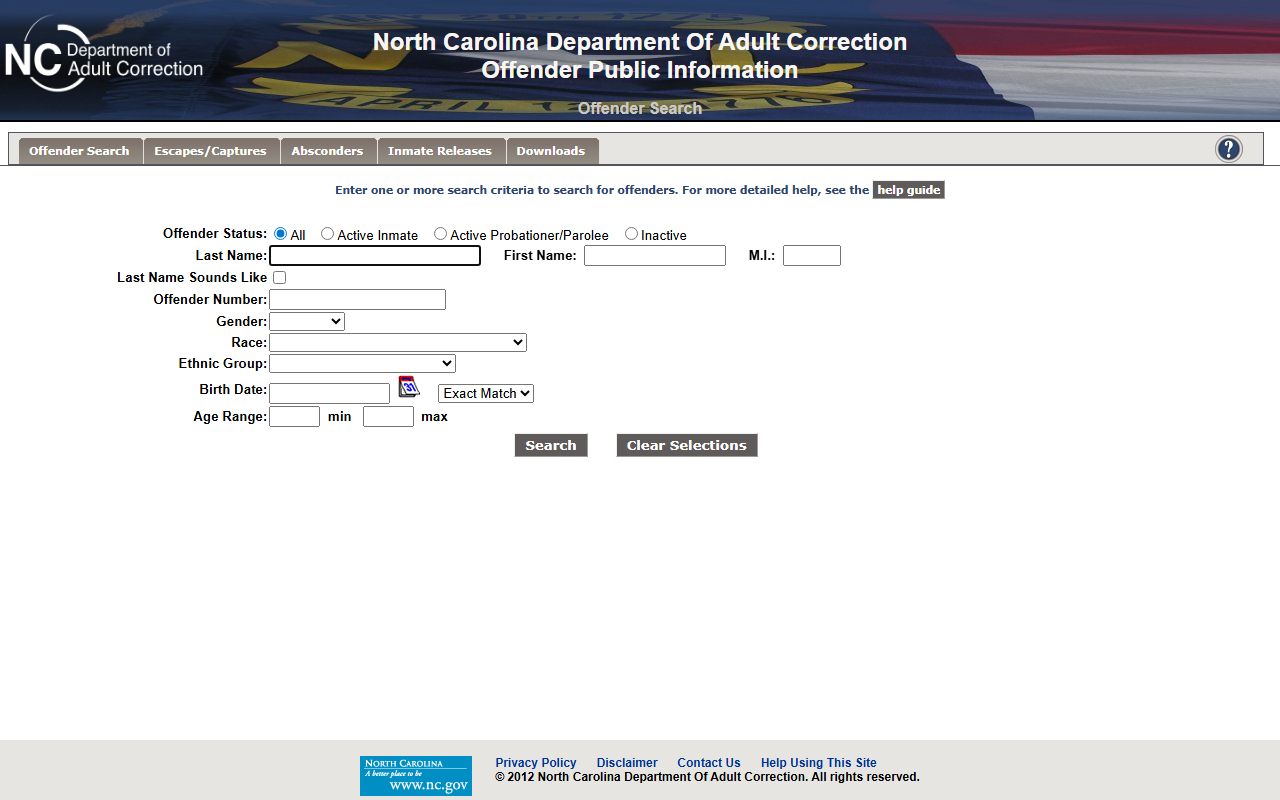
The N.C. Department of Adult Correction offender search covers state custody and supervision records.
Public Access to Arrest and Charge Records
North Carolina public-records law treats law-enforcement investigative records differently from basic arrest or charge information. Investigative records and criminal intelligence records are generally not public records, but basic arrest, charge, incident, and returned warrant information may be public unless sealed or otherwise restricted. Once a criminal charge is filed in court, court-record access rules and confidentiality limits apply.
Returned arrest and search warrants are court records unless sealed by court order. Active warrants may not appear in ordinary public online records before execution or return. For a filed court charge, use eCourts and the Clerk of Superior Court. For custody, use the Sheriff's Office. For agency-held law-enforcement records not online, request from the agency that maintains the record, while recognizing that investigative material may be withheld.
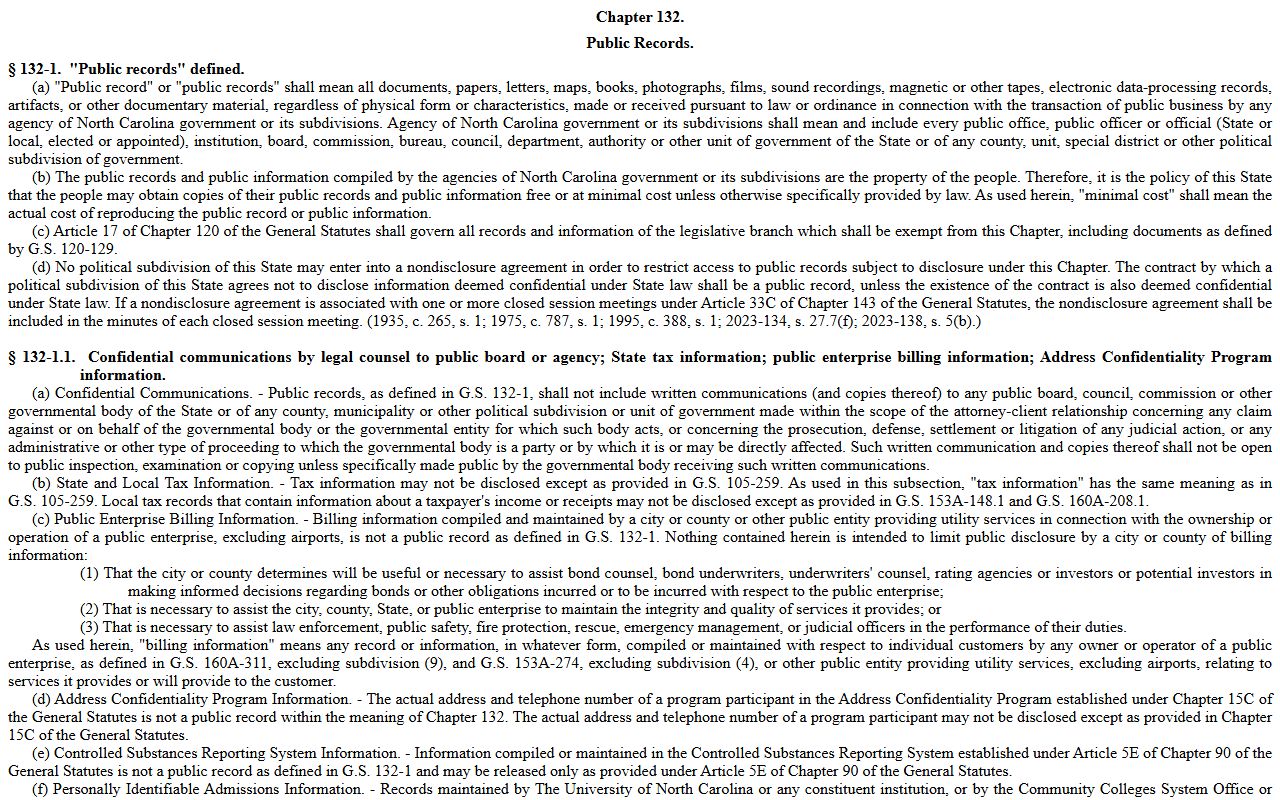
The North Carolina Public Records Act contains the key law-enforcement record distinctions.
DA Screening and Prosecution
Cherokee County is in Prosecutorial District 43. The official district attorney page identifies Ashley Hornsby Welch as District Attorney for the district, which includes Cherokee and six other western North Carolina counties. The Cherokee County court contact directory lists a local District Attorney contact at (828) 835-7750.
The DA's office prosecutes criminal cases, represents the State in criminal matters and some juvenile matters, prepares criminal trial dockets, advises law enforcement, and works with victims. That prosecutorial role is why a charge seen at booking can change before final disposition. A prosecutor may proceed, amend, reduce, dismiss, or seek indictment depending on the evidence, law, and court process.
The U.S. Attorney's Office for the Western District of North Carolina handles federal prosecutions separate from county court charges.
Restricted Cherokee County Charge Records
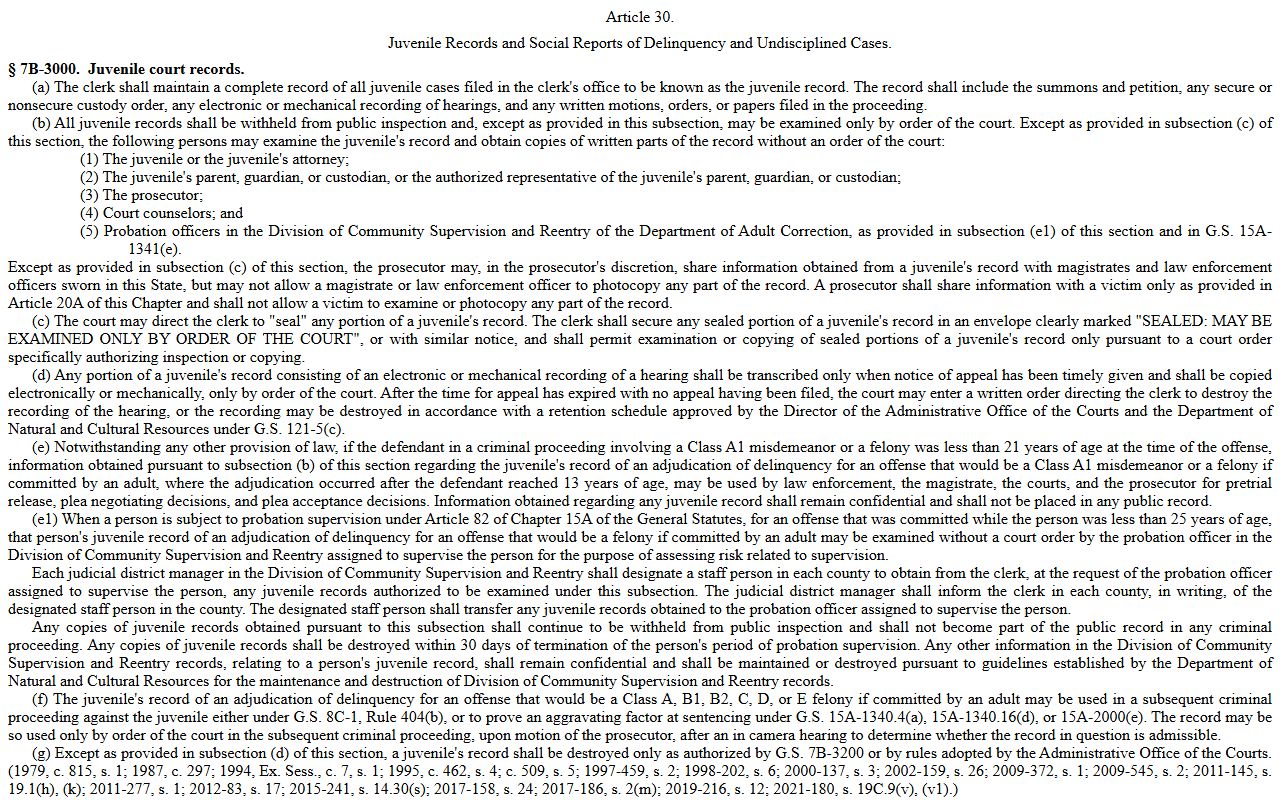
Juvenile records are confidential under N.C.G.S. 7B-3000 except as allowed by statute or court order. Sealed records and expunged records are also restricted from ordinary public lookup. Expunction under Chapter 15A, Article 5 can remove or seal qualifying arrest, charge, or conviction records after court approval.
| Sealed | Expunged | |
|---|---|---|
| Public Search | Hidden from routine public access. | Removed from ordinary public search after a granted expunction. |
| Reason | Court order or confidentiality statute. | Eligibility under adult or juvenile expunction law. |
| Practical Effect | May still exist for limited authorized uses. | May be sealed or destroyed for state record purposes as law provides. |
The juvenile confidentiality statute is published as N.C.G.S. 7B-3000.
Background Check Limits
Casual searches of arrest records and court charge records are not the same as official background checks. The Judicial Branch directs certified single-county criminal searches through the Clerk of Superior Court with Form AOC-CR-314 and the $25 fee. For employment, housing, insurance, credit, and other regulated screening, use legally compliant consumer-reporting channels rather than informal web searches.
Important: An arrest or pending charge is not a conviction, and final disposition must be verified from the official court record.