
Cherokee County Probate Records Overview
North Carolina does not use a stand-alone county probate court for Cherokee County. The North Carolina estates help topic explains estate administration, while the Cherokee County office that receives local filings is the Clerk of Superior Court. The clerk has both recordkeeping duties and judicial duties in estates, some guardianships, and special proceedings. That means the same courthouse office can be the filing desk, the record custodian, and the decision-maker for many estate administration steps.
A will has no legal effect until it is probated by the court. After death and filing, a will generally becomes a public record unless another rule restricts access. Estate records may include a will, application for letters, preliminary inventory, inventory, notice to creditors, year's allowance, summary administration papers, small estate affidavit, accountings, orders of the clerk, receipts, releases, and closing documents. Online search results may show case information, but the full file may still require clerk-counter access in Murphy.
The statewide estates help topic is the source for this Cherokee County probate records image.
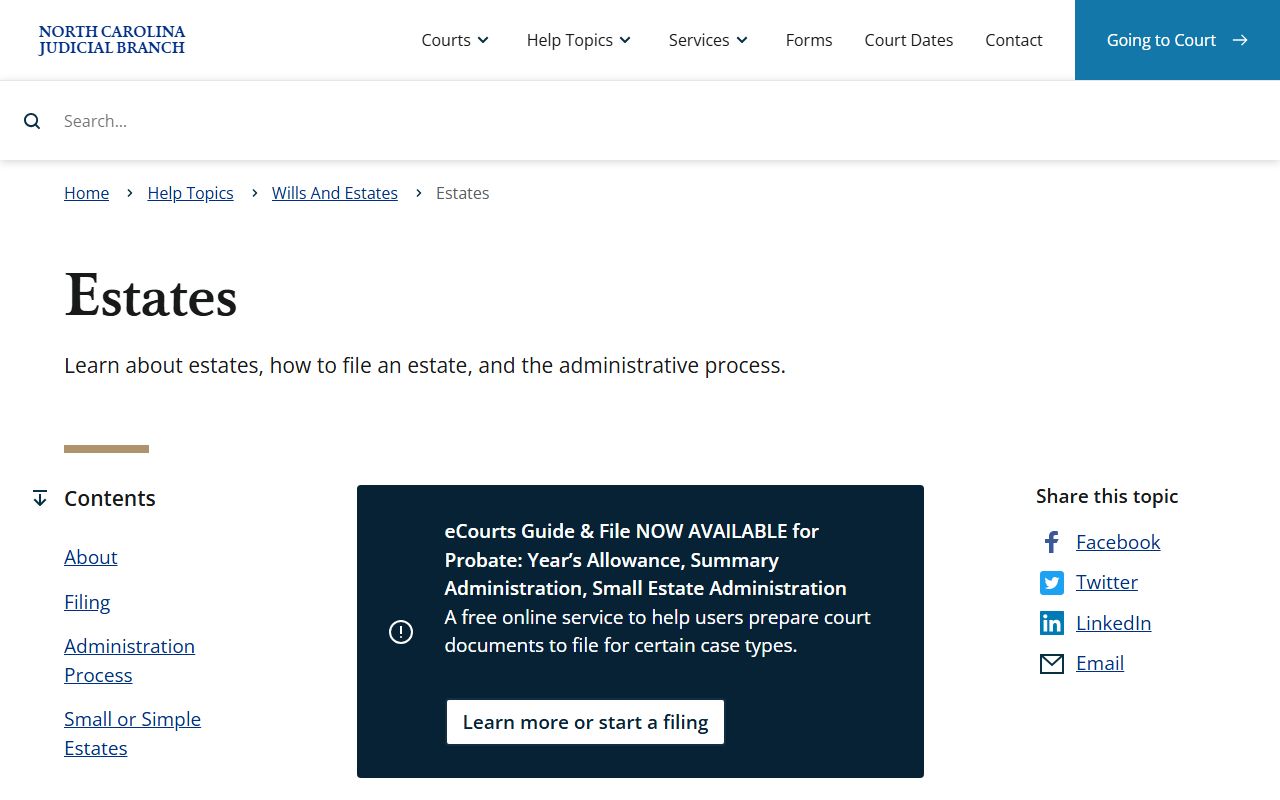
The state guidance supports the local filing path through the Cherokee County Clerk of Superior Court acting in estates.
Cherokee County Probate Office Contact
For a Cherokee County estate, use the Clerk of Superior Court at the county courthouse. The clerk is the place to ask about opening administration, viewing an estate file, requesting copies, checking whether a paper file must be reviewed in person, and confirming which current forms or costs apply. The Cherokee County court contact directory is the local Judicial Branch contact source. The research did not locate a stable official named clerk biography, so public copy should refer to the office rather than a named current clerk.
Cherokee County Clerk of Superior Court
75 Peachtree St
Murphy, NC 28906
(828) 835-7740
Monday-Friday, 8:00 a.m.-12:30 p.m. and 1:30 p.m.-5:00 p.m.
Note: Official sources list the courthouse as wheelchair accessible and closed during the midday lunch interval.
Cherokee County Probate Terms
Estate filings use terms that are precise in court but can be read in plain language. These definitions help separate the person who died, the person who acts for the estate, and the type of proceeding being filed with the clerk. North Carolina also uses the word "letters" for the clerk-issued authority that lets a personal representative act for an estate.
- Testator
- A person who made a will before death.
- Executor
- The person named in a will to carry out estate duties after appointment by the clerk.
- Intestate
- Dying without a valid will, so state succession law controls who may inherit.
- Letters
- Clerk-issued authority, such as letters testamentary or letters of administration, allowing estate action.
- Guardianship
- A court-supervised matter for a minor or adult who needs a legally appointed decision-maker.
- Special proceeding
- A clerk-supervised civil matter that may include certain estate, partition, foreclosure, or guardianship issues.
Open Cherokee County Estate Records
Estate administration is usually opened in the county where a North Carolina resident was domiciled at death. For a nonresident, North Carolina may allow administration in a county where the person left property or assets, or where estate property later came into the county. A nonresident motorist who dies in North Carolina may have administration in any North Carolina county. In each case, the clerk can confirm whether Cherokee County is the correct venue before a filing fee is paid.
- Visit or contact the Cherokee County Clerk of Superior Court before filing if venue or paperwork is unclear.
- Bring the original will if one exists and a certified death certificate.
- Complete the application and preliminary inventory of the decedent's property.
- Pay the confirmed estate-opening cost and ask whether extra itemized costs apply.
- Use the statewide Judicial Branch forms search or forms provided by the clerk.
The statewide judicial forms search is the source for this Cherokee County probate forms image.
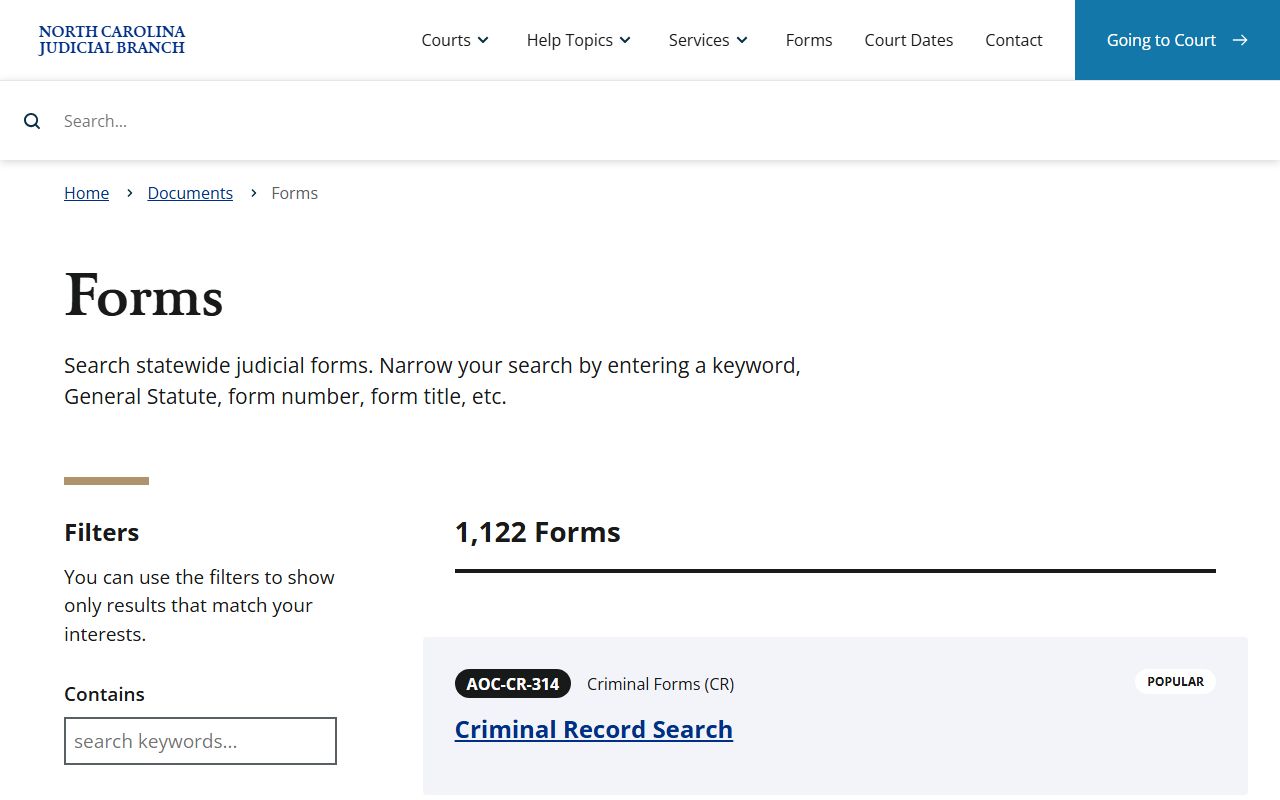
The forms search is useful because estate filings often need a current AOC form, not a locally improvised document.
Cherokee County Probate Fees
The research confirmed the statewide estate-opening fee cited by the Judicial Branch estates help topic. It also found the current North Carolina court-costs publication page, which includes separate estates court-cost materials, but the full itemized Cherokee-applicable estates table was not transcribed. For that reason, the safe published fee statement is the confirmed starting cost, plus a direction to verify itemized costs with the current court-costs publication or the clerk before filing.
| Probate Item | Amount / Status |
|---|---|
| Opening estate administration | $120 confirmed starting fee |
| Itemized estates court costs | Verify in current court-costs publications |
| Copies of estate documents | Available through clerk for a fee |
| Certified probate copies | Confirm amount with Clerk of Superior Court |
| Small estate or summary administration forms | Costs should be verified before filing |
Current court costs should be checked close to the filing date because annual publications may change itemized fees.
Search Cherokee County Probate Records
Probate access should use a channel stack. Start with the North Carolina eCourts Portal for public case information where estates or special proceedings are visible. Then use the public terminal at a clerk's office for civil, special proceeding, and estates case information. If the actual estate documents are needed, use the Cherokee County clerk counter because the paper or full electronic file belongs in the county where the estate is administered.
| Search Field | Type | Required | Use for Probate |
|---|---|---|---|
| Record Number or Name | Text | Yes | Use an estate file number, decedent name, or party name. |
| Filter by Location | Dropdown / multi-select | No | Select Cherokee County to avoid statewide name matches. |
| Filter by Search Type | Dropdown | No | Party Name, Business Name, Nickname, or Sounds Like may appear. |
| Case Type / Case Status | Dropdown | No | Use when available to narrow estates or special proceedings. |
| File Date Start / End | Date | No | Useful when the approximate death or filing date is known. |
Portal public access is not the same as a certified copy. If the record is not visible online, if document images are missing, or if a certified estate copy is needed, contact the Cherokee County Clerk of Superior Court.
Cherokee County Small Estate Options
North Carolina may allow simplified estate procedures in some situations. The Judicial Branch states that smaller estates may use an Affidavit for Collection of Personal Property of Decedent. Summary administration may be available when the surviving spouse is the sole heir or devisee. Some streamlined processes may also apply when the estate concerns only funeral or burial costs. Guide & File is available for probate Year's Allowance, Summary Administration, and Small Estate Administration.
These options do not mean there is no record. They change the form and process used at the clerk's office. A Cherokee County small estate file may still show the decedent name, filing date, petitioner or fiduciary, asset details in the preliminary inventory or affidavit, clerk orders, receipts, releases, and closing documents. If the online record is thin, the local estate file is the better source.
NC Vital Records ordering is one related source for death certificates needed in estate administration.
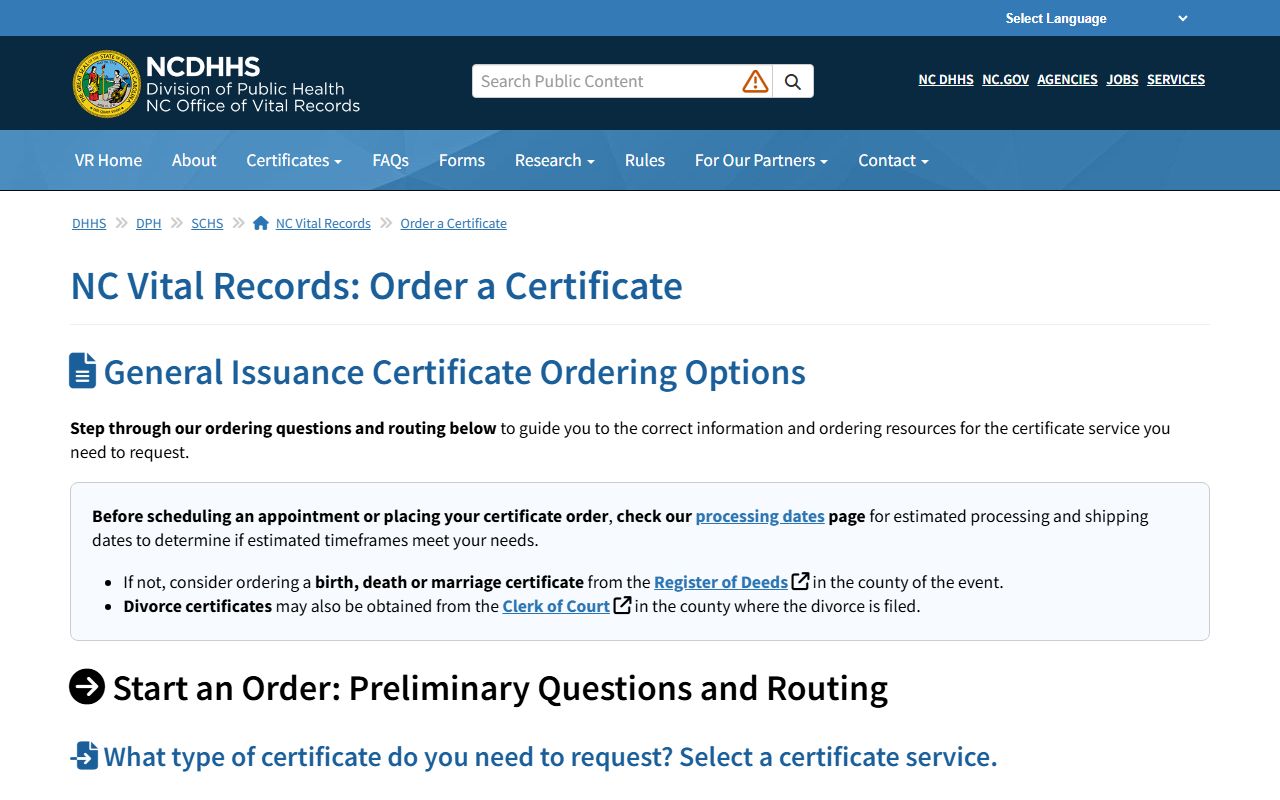
A certified death certificate is often needed before the clerk can open or process an estate matter.
NC Vital Records fee information is also relevant when estate filers must obtain state certificates.
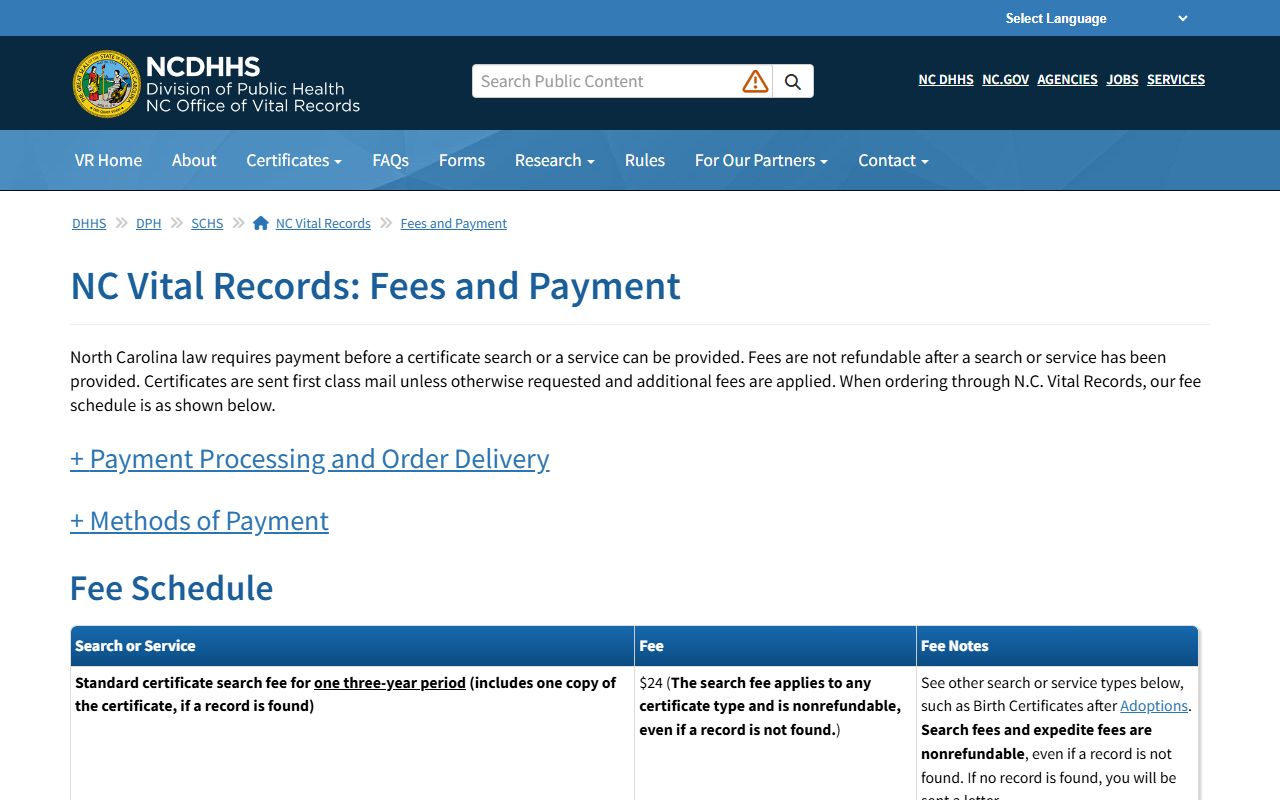
Those certificate fees are separate from the court costs paid to open or manage an estate file.
Restricted Cherokee County Probate Records
Many estate records become public after filing, but not every related court file is open in the same way. Adoption records are confidential under North Carolina law, and juvenile, mental health, protected personal information, sealed documents, and some guardianship-related materials may be restricted. Public copies may also omit Social Security numbers, financial account data, protected addresses, and minor-identifying details.
The research also notes that marriage licenses are not probate records, but the return rule can matter when family status must be proved in an estate. North Carolina's marriage-license return statute supports the local rule that an officiant must return the license after the ceremony. Estate filers should use the Cherokee County Register of Deeds for marriage certificates and the Clerk of Superior Court for estate files, rather than mixing the two offices.
The North Carolina adoption confidentiality statute is the source for this Cherokee County probate restriction image.
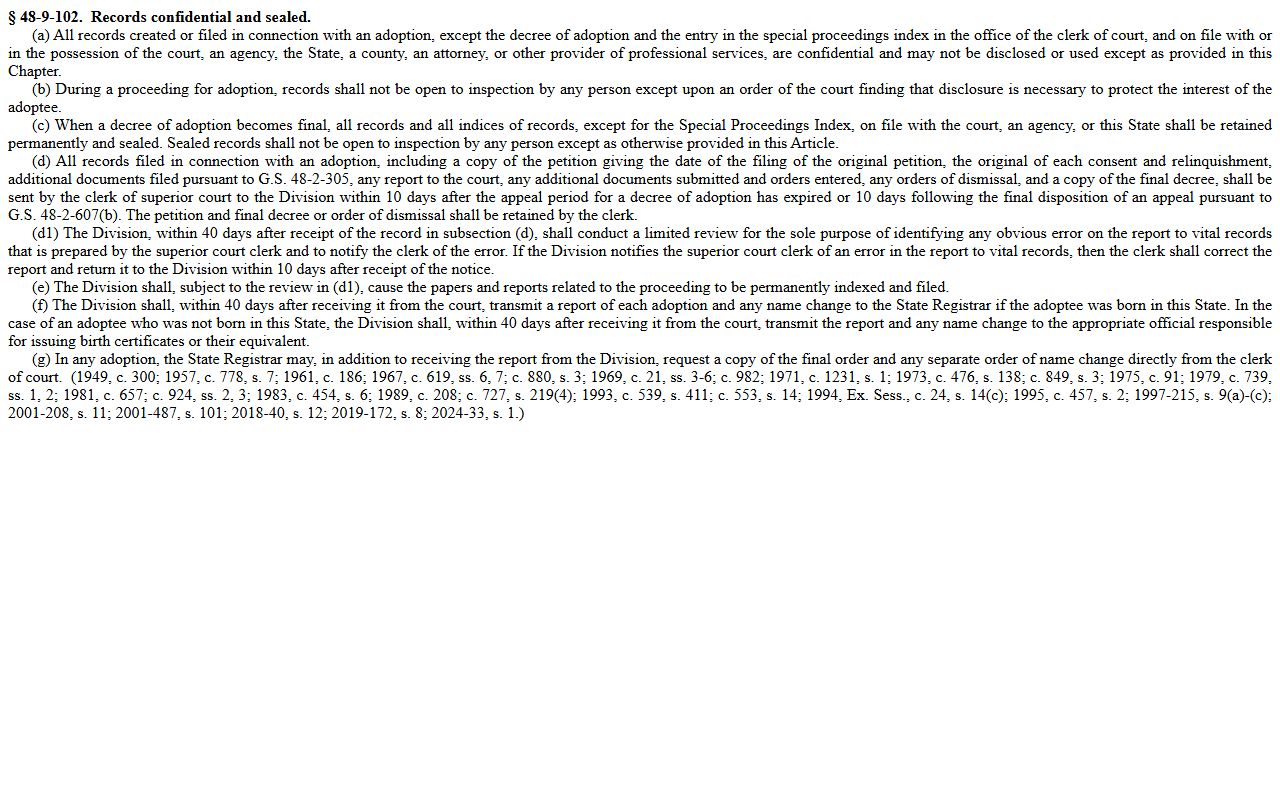
Adoption confidentiality is a clear example of a family-related court record that should not be treated as an ordinary public estate file.
The marriage-license return statute is also part of the family-record context that can intersect with estate proof.
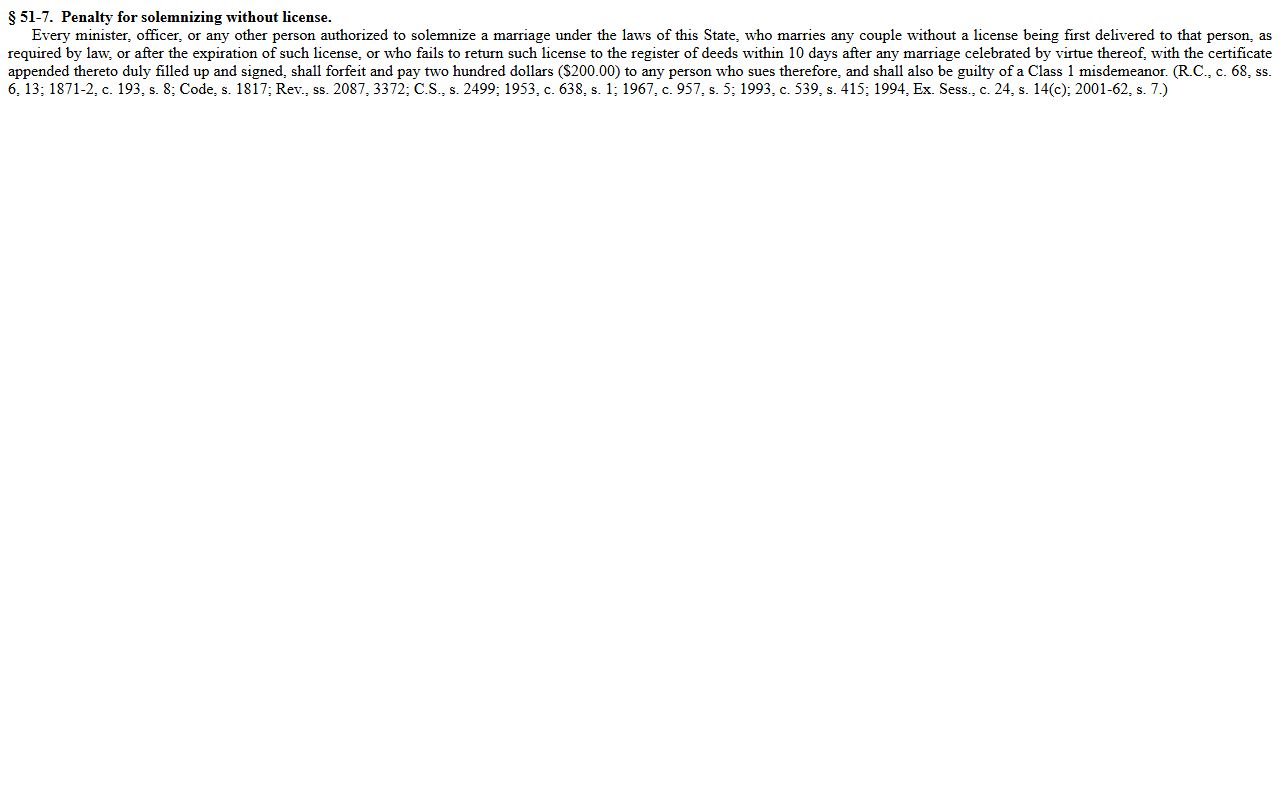
When estate status depends on a spouse relationship, the recorded marriage certificate should come from the Register of Deeds.